Theme Layout

Boxed or Wide or Framed

Theme Translation

Display Featured Slider

Yes

Featured Slider Styles

Display Grid Slider

Grid Slider Styles

Display Trending Posts

Yes

Display Author Bio

Display Instagram Footer

No

Dark or Light Style

Dark

About Me

My photo
This blog is an amateur photographer's attempt to show how beautiful the world really is. He is drawn to the colors of nature like a moth to a candle light. What are showcased here are nature's grand display of colors at sunrise and sunset, beautiful beaches and off-the-beaten track locations in his beloved Philippines, waterfalls and some of nature's great sculptures, architectural gems, and other views from around SE Asia that he was fortunate to see at one point.

Blog Archive

Powered by Blogger.

January 18, 2011

baler: diguisit bay moods


Diguisit Bay
moody Pacific

Huge waves and rugged coastline shaped by the Pacific Ocean characterized the surfing town of Baler. One of the interesting places there is Diguisit bay.  Located in Brgy Zabali, its just a few minutes outside of town proper by tricycle.

There is a picnic area there frequented by locals and tourists alike. Tall grotto-like sea stacks with wind battered trees are just a few meters from shore. I imagined what the sunset can be like: fiery skies, crashing waves, towering sea-stacks. But the Pacific had other plans, and just gave us the last two in the list, maybe the fiery sky is reserved for the next visit.

Diguisit Muted Sunset
Diguisit muted sunset

Sunset on our first day lacked the colors I imagined, but it made it up with an interesting mood. For a few seconds, a golden layer of colors managed to break through the thick rain clouds.

Scale of Things
scale of things

Tenacious beings that we are, we headed there again the next day for a second try. And for the second time, the Pacific said "No!". Sunset was gloomier than the previous day.

Aniao Islet in the distance
with Aniao islet in the distance

But in hindsight, I am thankful for that particular weather. It gives the place, often shown in bright blue skies and near perfect weather, a different character.
QuickEdit
Lantaw
10 Comments
Share This Post :

January 10, 2011

tupi: tarsier sanctuary in linan (south cotabato)


Linan Tarsier
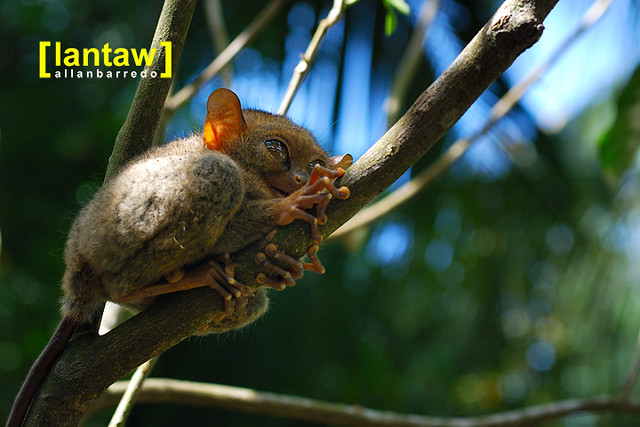
a tarsier in Linan

They have become one of Philippine’s tourism mascots, figuring in posters and logos including the most recent Department of Tourism’s (failed) “Pilipinas Kay Ganda” logo. Although they are found in various places in the archipelago (central eastern and southern provinces), most people associate the tarsier with the island of Bohol.

Imagine my surprise when I found out that these endangered primates are thriving practically right in my province’s backyard.

There had been reported sightings of tarsiers in the forested areas of South Cotabato, like the areas near Mt. Parker or the settlements at the foot of Mt. Matutum. But I guess nobody really gave that much attention until people started noticing images of tarsiers on souvenir t-shirts from Bohol. Their first reaction: “So they are called tarsiers… we’ve seen those in the hills near our village”. The B’laans call tarsiers “tukay mal” or “small monkey”.

Linan Tarsier

tukay mal

It was just recently (the project started July 2010) that the provincial government of South Cotabato started seriously advocating the protection of their habitat. According to the local officials, it was hard at first to convince the locals to stop their slash and burn practices. Charcoal-making is also the most common source of livelihood – that meant cutting trees. Eventually people realized the importance of the wildlife around them. They stopped their destructive practices and the forest rebounded. Now there is a healthy population of tarsiers near Bagong Silang – a small B’laan village in Brgy. Linan in Tupi. Linan, located at the foot of Mt. Matutum, is now known as the (unofficial) “tarsier sanctuary” of South Cotabato.

Linan Tarsier
built for jumping

In Bohol they have developed a semi-wild enclosure to keep the tarsiers in, but tarsiers in Linan, which could be another subspecies, are wild. The first time I went to Linan I was not able to see one. Contrary to what some think, tarsiers are fast – they can jump several meters from tree to tree (thanks to their very long hind legs – they have long tarsus bones, hence their name) and they hide in burrows or holes/cracks on trees/rocks. Catching one in the wild isn't easy.

Linan Tarsier
close encounter

I was finally able to see a Linan tarsier few weeks ago when my family and several friends went there to distribute school supplies to the B’laan kids (a family outreach project). We “borrowed” one from the nearby forest and release it again after we took photos. There are days when you can find the tarsiers just near the perimeter of the village.

Linan Tarsier
sharp teeth - perfect for munching on crickets

The tarsier looked timid, but it’s actually a predator, feeding on insects primarily and is known to hunt small birds and lizards too. They are nocturnal but some could also be active during the day. Philippine tarsiers are said to be territorial and usually sleep and hunt alone.

Some villagers had once tried keeping them as pets, but they are known to kill themselves in captivity. Now they are aware of how precious these tarsiers are and how they need to be protected. A lot of work still needs to be done if the local government wants a sustainable conservation program just like what they are doing in the Philippine Tarsier sanctuary in Corella in Bohol.

Aside from tarsiers, forested area at the foot of Mt. Matutum is also home to squirrels, flying foxes, civets, and several species of eagles.
QuickEdit
Lantaw
26 Comments
Share This Post :

January 1, 2011

2011: its 1/1/11, a new year and a fresh start


Its a fresh start for 2011

Its the first day of 2011, a new year and a fresh start. 2010 had been a great year, full of exciting travels and new friends. Join me in looking back at the previous year's favorite photos and adventures.

January
Started 2010 with a trip to the coastal town of Alabel in Sarangani province to photograph its mangroves. Mangroves play an important part in the coastal ecosystem, and it was great to see a reforestation area in Kawas with full grown mangroves.

Strong and Sturdy
strong and sturdy

February
Found myself revisiting a favorite cove in Zambales, and setting foot on another one for the first time.

Nagsasa Evening Colors
Nagsasa evening colors

While Nagsasa is the most picturesque of the Zambales coves, Silanguin is the grandest, with a shoreline more than 3 times longer than Nagsasa.

Star Bright
Silanguin dusk

March
Its summer time and what best way to spend it than hitting the beach. Together with a group of photo enthusiasts, I visited my favorite nook in Pangasinan: the quaint fishing village of Tambobong.

As the sun goes down
sunset at Nalasin point

From the beach, I soon found myself trekking to Laguna's Hidden Falls (aka Buntot Palos) in the lakeside town of Pangil. The trek was easy, but the climb down to the falls was a challenge. On the first day there I accidentally smashed by circular polarizer on a rock when I slipped on a moss covered boulder - one of the hazards of outdoor photography

Buntot Palos

April
Summer was in full swing. I journeyed to the northern-most province in Luzon and to the southern-most province of mainland Mindanao.

Stumped
sunrise in Maasim, Sarangani

Rosy Light
rosy morning in Bangui windmills

May
High above the tree tops, I rode the most scenic zip line in the Philippines: the two segment Lake Sebu zip line.

2nd falls drop
soaring

Famous for its three lakes, the ancestral home of the T'bolis now draws adrenaline junkies.

2nd Falls
Hikong Bente falls

From the cool mountain air of Lake Sebu, it was beach time the next few days as I went around Samal island with the family in tow.

Babak Sunset
Babak sunset

June
Its difficult to find one word to describe Coron - "magical" seems understated. Its natural wonders, both below and above the sea captured the imagination of many.

Coron Colorblast
sunset in Coron

Kayangan Snorkel
Kayangan Lake

July
July was a busy month, with the demands of a new job piling up. But I was able to squeeze in a weekend on a beautiful rock off the coast of Zambales: Capones island.

Capones On the Edge Sunset
sunset on the edge

August
Its the middle of the rainy season and its best spent photographing waterfalls. The multi-layer Balagbag falls in Real Quezon was a perfect daytrip destination.

Balagbag Falls
silky Balagbag

While its rainy in Luzon, its still perfect beach weather down south in Gumasa in Glan (Sarangani province).

Gumasa Midday Sailboat
Gumasa sailboat

September
We were drawn back to the magnetic north: the province of Ilocos Norte. It was a weekend of rugged coastal seascape, waterfalls, and iconic churches.

Kapurpurawan Sunrise
Kapurpurawan rock formation

Kaangrian Tree Framed
Kaangrian waterfalls

Paoay Church at Sundown
Paoay Church

October
Its a solo trip this time to Concepcion in northern Panay. I spent a quiet weekend in Bolobadiangan Island, famous for its long sandbar.

Bolobadiangan Muted Sunset
muted sunset

Bolobadiangan Welcome Lounge
Bolobadiangan shore

Of course a trip to Iloilo is not complete without dropping by some of its heritage churches.

Miagao Church
Miagao church

November
Time for my yearly pilgrimage to Candaba wetlands, a bird sanctuary in Pampanga. Was not able to get good photos of the birds but was gifted with a beautiful sunset.

Candaba Watch Tower Afterglow
Candaba sunset

Together with several kindred spirits, I was able to visit Aurora province (long overdue) on Luzon's east coast, facing the temperamental Pacific Ocean.

Blue Steel Sunrise
moody morning in Ampere beach

Diguisit Bay
clash of the Pacific waves in Diguisit Bay

Ditumabo Falls
Ditumabo: the Mother Falls

December
The season of giving. My family and I, together with a few close friends, spent a day in a B'laan community in Bagong Silang in Linan, a small barangay at the foot of Mt. Matutum in Tupi, South Cotabato.

DSC_8630-720
hike to Bagong Silang

We distributed school supplies (courtesy of Black Pencil Project) to about 50 B'laan kids.

DSC_8645-720


DSC_8785-720
school supplies from Black Pencil Project

This community is the designated protector of the tarsier sanctuary near the village (yes, tarsiers are not exclusive to Bohol). They have stopped with their slash and burn practices to protect the thriving population of tarsiers in the nearby hills.

Tarsier: Small monkey
a tarsier in Linan

2010 had been a good year. It has a few downs, but in the end, all's well that ends well. May 2011 be even better.

This post won the Top Photo Post in the 
Philippine Blog Awards 2011.


QuickEdit
Lantaw
21 Comments
Share This Post :
[name=lantaw] [img=https://c5.staticflickr.com/9/8237/8458831412_c95b7dbbae_t.jpg] [description=Loves to shoot nature's grand display of colors at sunrise and sunset, beautiful beaches and off-the-beaten track locations in his beloved Philippines, waterfalls and other natural wonders] (facebook=https://www.facebook.com/lantawphotos) (twitter=https://twitter.com/lantawphotos) (instagram=https://www.instagram.com/lantaw/)